
Call
Contemporary teaching and learning can often seem a cauldron of complexity, contradiction and change. Today, the reshaping of how knowledge is produced, taught and experienced is happening at dizzying speed. Whether it be AI, tolls like ChatGPT, reflexive research practices, microlearning, participatory action research or learning analytics, the plethora of new and emerging factors informing the modern academy is enormous.
In this context, we seek to understand best practice teaching and research from past and the present, and to speculate on the future. We are interested in how the current landscape spawns innovative teaching. We ask whether it could blur the difference between classroom teaching, investigation and published research. As a result, we ask whether the typically hierarchical relationship between those of us who teach and those of us who research, is under question.
In this regard, our argument is that this distinction has always been blurred. For example, teachers have frequently seen the classroom as a pedagogical testing ground for theory. Artists often continue their creative practice through their role as educators. Social scientists ‘teach’ the cultures they experience daily. Design educators use professional competitions as student projects, while engineers use problem-based projects to connect to the ‘real world’. In their turn, architects and urban planners use the ‘studio’ as an extension of research as a matter of course. Teaching then, is not only connected to research, but to industry, communities and broader social issues.
Reflecting this, the conference is interested in themes like flipped classrooms, ungrading and innovative peer assessment. It welcomes papers on the computational social sciences, the digital humanities and universal design for learning. It is keen to hear about academic, industry and community partnerships, and ever more specialized developments in student support. Consequently, papers may be focused on issues ranging from the scholarship of teaching and learning to rapid prototyping in research, from digital archiving to community engaged learning, and from specific teaching projects to emerging research theories, and more.
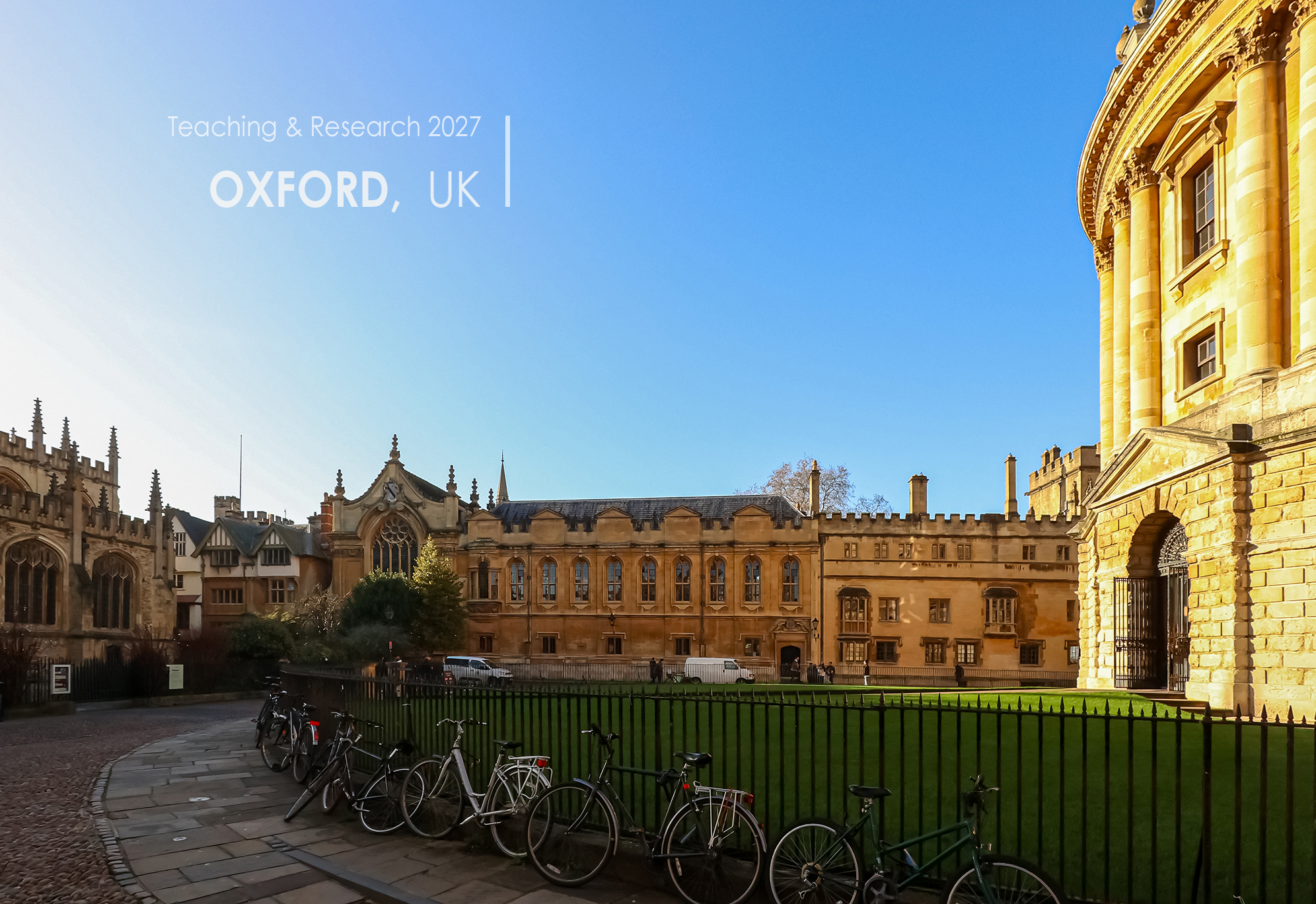
Taking place in the historic city of Oxford, UK, the site of the conference is one of the world’s most renowned centres of scholarship and learning. It has centuries-long academic traditions, colleges and architecture, as well as a current, vibrant and cutting-edge intellectual life today. It thus offers an ideal backdrop for discussions about the evolving role of teaching and research in the modern academy. Bringing together participants from across disciplines and institutions to this iconic venue, we seek to foster new conversations about how teaching and research can inform, challenge and enrich one another in various fields.
Image by AnneLeven