

Livable Towns, Cities, Regions
From Urban Conservation to Climate Action

University College Dublin
Event Date: June 28-30, 2027
Abstract Date: July 15, 2026
June 2027
A conference on the Future of Place, Planning, Communities & Design
A collaboration between University College Dublin & AMPS | Part of the Livable Cities Series

Call

Towns, cities and regions around the world are confronting profound environmental, social and spatial transformation. Population growth, housing pressures and infrastructural demands are reshaping how our built environments are envisaged, developed and governed. Climate change, sustainability and resilience are reframing how we think about the future of design and planning. In their turn, our existing urban fabrics, inherited buildings and historic neighbourhoods, shape the possibilities of change.

In this context, when we design, preserve and plan the places in which we live, we are dealing with an increasingly complex and interconnected problem. Whether it be conservation, planning or architecture, or questions of communities, health and climate change, the terrain on which we tread inevitably overlaps.

he challenge in this scenario then, is not simply to preserve the past, design the present and plan a sustainable future, but to do it unison. For example, the reuse of existing buildings is central to carbon reduction; the participation of communities in design is key to urban planning; the adaptation of cities to digital infrastructures supports resilience and sustainability. It is a scenario that requires the skills of architects, planners, environmental scientists and technologists; the perspective of historians, sociologists and health professionals; and the knowledge and insights of local people and communities.

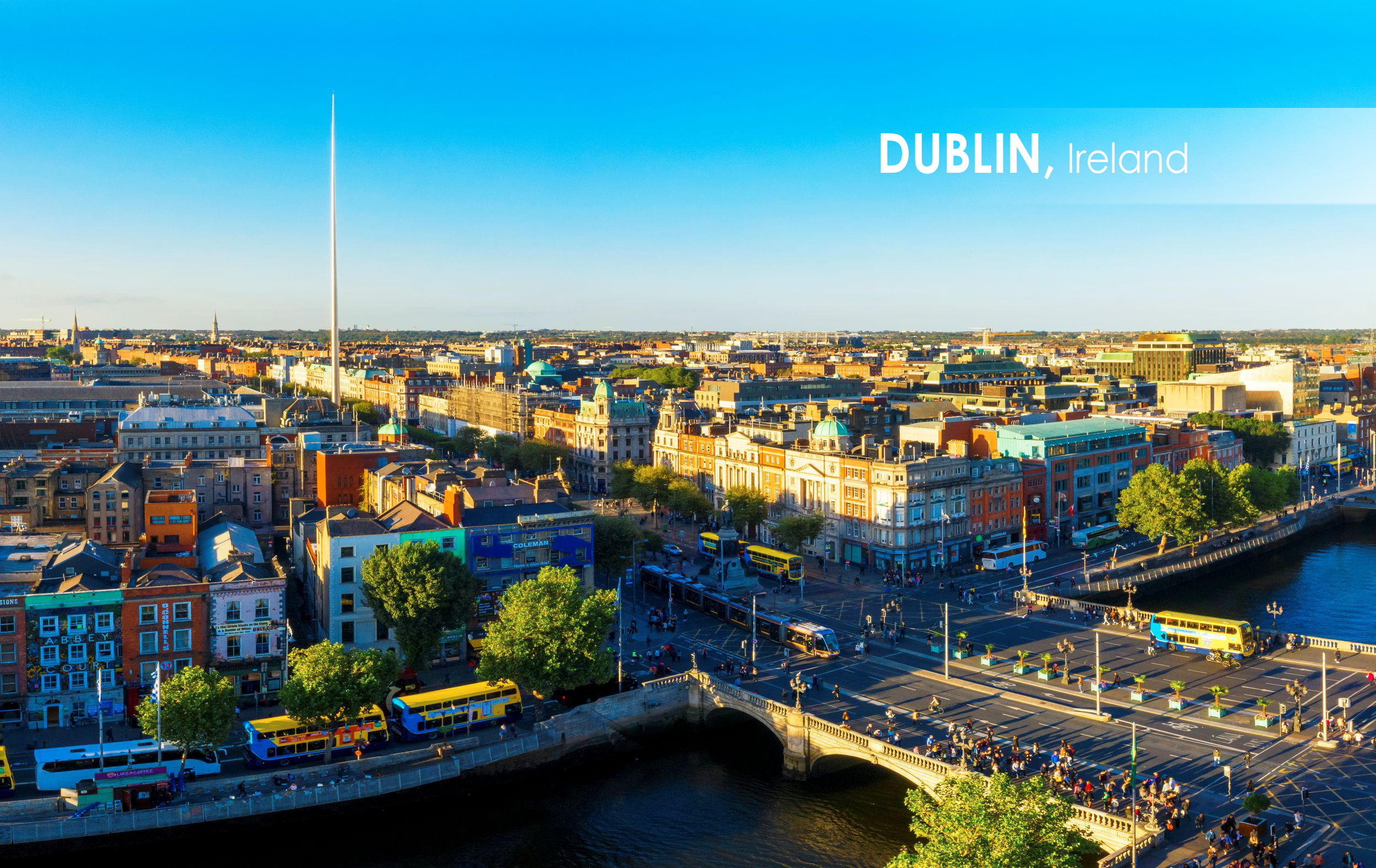
Reflecting on this from the city of Dublin, the location of the conference itself is a prime example of the issues at play. In Dublin questions of climate adaptation, conservation, housing, and participatory planning unfold within a compact, walkable coastal capital shaped by layered development — from Georgian terraces and civic squares to docklands regeneration and expanding transport infrastructure. Its scale enables close engagement with several of the material realities of an existing built environment in a process of transition.

At the conference, there will be multiple themes for debate. In University College Dublin for example, areas of interest include: community engagement, urban conservation and adaptive reuse, historic urban landscapes, preparing for an uncertain future, and an interest in ‘pasts, presents and the possible’. More>>

From the perspective of AMPS, there is interest in overlapping questions like resilience, regional planning, gentrification, affordability, community cultures, smart technologies, sustainable transport, architectural design, accessibility, health and wellbeing. More>>

Central to all this, is the premise that if we are to better understand the livability of our towns, cities and regions, we are obliged to think across currently disparate areas of thought: from social policy to regional planning, architectural design to public health, and from urban conservation to climate action.

Image by Pawel Gaul
Disciplines

  • Urban Planning
  • Sustainability
  • Architecture
  • Sociology
  • Human Geography
  • Transport
  • Art
  • Landscape Architecture
  • Media Studies
  • Environmental Psychology
  • Communications
  • Digital Design
  • Humanities
  • Public Health
  • Community Studies
  • Design
  • Urban Economics
  • Cultural Studies
  • Public Services
  • Creative Industries
  • Tourism
  • Heritage

Key Dates

Abstracts (Early)
15 July 2026
Feedback
20 August 2026
Conference
28-30 June 2027
Full Paper Submissions
15 August 2027
Full Paper Resubmissions
20 December 2027
Publications
10 March 2028

Research Areas

Sustainability
Climate Change, Resilience, Sustainable Design & Planning...
Urban Conservation
Adaptive Reuse, Regeneration, Restoration, Contextual Design...
Communities, Cultures & Society
Participation, Housing, Migration, Affordability, Gentrification...
Architectural Design
Interiors, Building Design, Architectural Theory & Practice...
Accessibility, Health & Wellbeing
Walkable Cities, Inclusionary Design, Accessibility, Urban Health...
Urban & Regional Planning
Planning Policy & Practice Across Scales: Towns, Cities, Regions...

Formats

Zoom: Virtual presentations coordinated by AMPS

Pre-recorded:  Pre-recorded presentations or films will be available permanently on the AMPS Academic YouTube channel

Written papers: In all cases, delegates can present full written papers for inclusion in associated conference publications


In-person: (15-20 mins)
Zoom: (15-20 mins)
Pre-recorded video: (15-20 mins)
Written papers: (3000 words)


Publications

The publishers that AMPS works with include Routledge Taylor & Francis, UCL Press, Cambridge Scholars Publishing, Vernon Press, Libri Publishing and Intellect Books.

.

Conference outputs include the AMPS Proceedings Series, ISSN 2398-9467; Special Issue Publications of the academic journal Architecture_MPS, ISSN 2020-9006; books by Routledge Taylor & Francis and short films available on the AMPS Academic YouTube Channel.

.

Written papers are optional.  If submitted they should be 3,000 word length. Formatting instructions to follow after the conference. All papers are double- blind peer-reviewed for the AMPS Conference Proceedings Series. Subject to review, selected authors will be invited to develop longer versions as articles in the academic journal Architecture_MPS or in specially produced conference books.

.

.

Submissions & Registration:

Registration Delegate Fee: $415 USD  |  Audience Fee: $210 USD                                                                                      Queries: info@amps-research.com


Click the button below to submit your abstract